Patek Philippe is widely regarded as the pinnacle of Swiss watchmaking, with a reputation built on rarity, heritage, and exceptional finishing. That reputation comes at a price – genuine examples command some of the highest values in the pre-owned market, and certain references are harder to get hold of new than almost any other watch in the world. That combination of prestige, scarcity, and price makes Patek Philippe one of the most heavily counterfeited luxury watch brands, second only to Rolex.
If you’re considering buying a pre-owned Patek Philippe, knowing how to spot a fake isn’t optional – it’s essential. This guide walks through the details that matter, from the obvious to the easily missed, so you can buy with confidence.
Why Fake Patek Philippe Watches Are So Common
Patek Philippe produces a fraction of the watches Rolex does each year, and demand for its most sought-after references – the Nautilus 5711, the Aquanaut 5167, the Calatrava 5227 – consistently outstrips supply. Waiting lists at authorised dealers can run for years, and even then, availability is rarely guaranteed to walk-in customers. That scarcity pushes buyers towards the secondary market, where the reassurance of buying direct from a boutique doesn’t exist in the same way.
Counterfeiters have taken notice. Modern replicas of Patek Philippe’s most iconic models are far more convincing than the poor-quality fakes of a decade ago – some now use genuine Swiss movements as a base, real gold cases, and closely-copied dial printing. At the price points involved, even a small, overlooked detail can mean the difference between a genuine six-figure watch and a very expensive imitation.
Where Fake Patek Philippe Watches Turn Up Most Often
Counterfeits rarely appear on the sites of established, reputable dealers – the risk sits overwhelmingly with private, unverified sales. Generalist online marketplaces and classified ad sites are the most common source, precisely because there’s no vetting process between listing and payment. Social media “deal” groups and direct messages offering a rare reference at a suspiciously good price are another frequent route, often paired with pressure to pay quickly before someone else does – a tactic that works against buyers doing proper due diligence, not for them.
Even auction houses and seemingly credible resale platforms have had counterfeit or heavily misrepresented watches slip through, so a professional-looking listing or a well-known platform name isn’t a guarantee on its own. The safest ground is always a dealer who inspects stock before it’s offered for sale and is willing to be transparent about that process.
The Risks of Buying a Fake Patek Philippe
A counterfeit Patek Philippe has none of the value of a genuine one. It cannot be sold through a reputable dealer, cannot be serviced by Patek Philippe or an authorised service centre, and will not hold or grow in value the way a genuine watch can. Any money spent is, in practical terms, gone.
There’s also a real difference in how the watch performs and ages. Patek Philippe movements are hand-finished and adjusted to standards that take highly trained watchmakers years to master. Counterfeits, however convincing on the surface, use movements that are not built or regulated to the same standard – they lose accuracy, wear unevenly, and are far more likely to fail over time.
Key Signs to Spot a Fake Patek Philippe
Weight and case finishing
Genuine Patek Philippe cases are finished to an exceptionally high standard, with a precise, consistent transition between polished and brushed surfaces. On a real watch, these finishes are crisp and deliberate; on a fake, they’re often blurred or inconsistent, and the case may feel lighter than expected for its stated material – particularly with gold and platinum models.
The movement
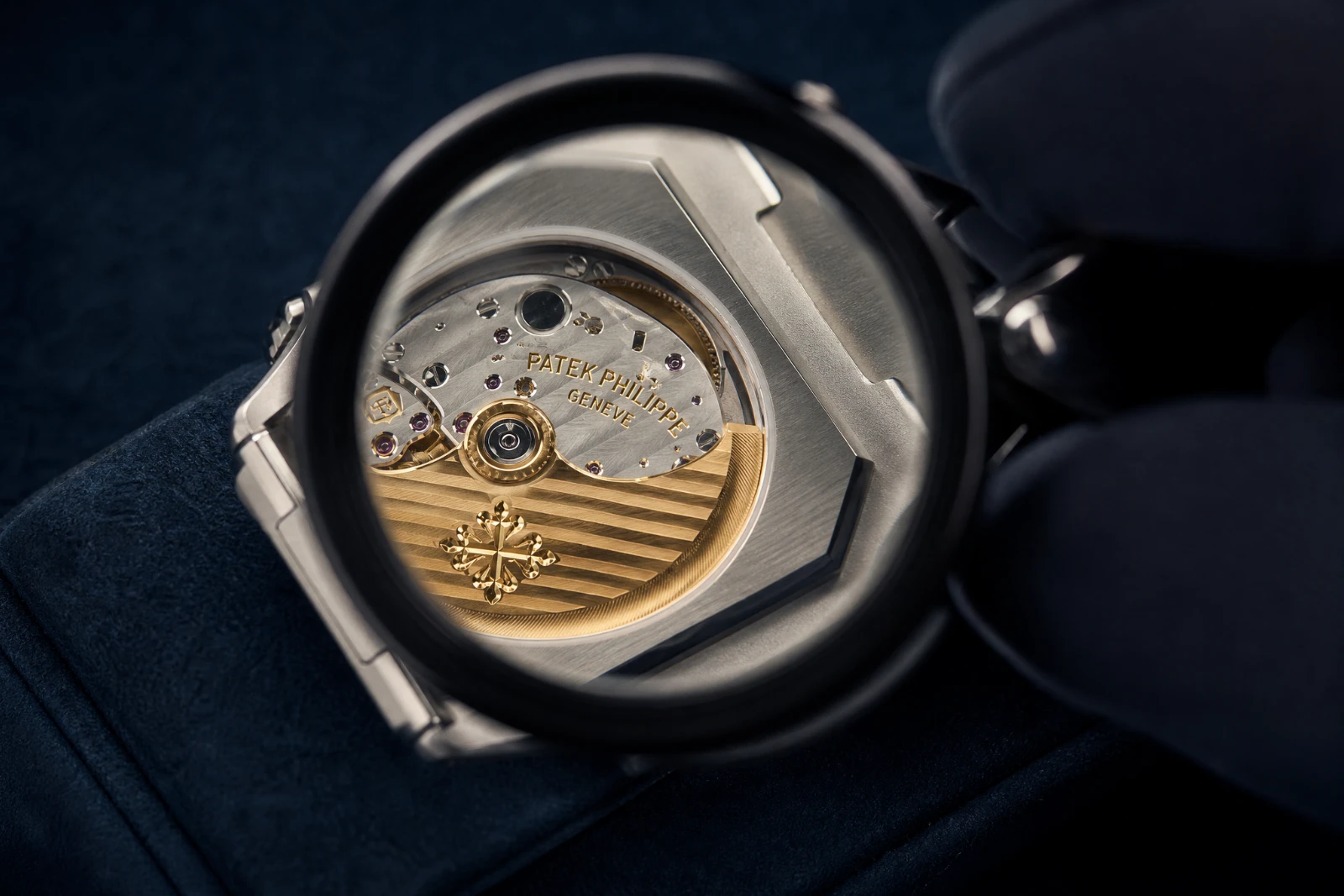
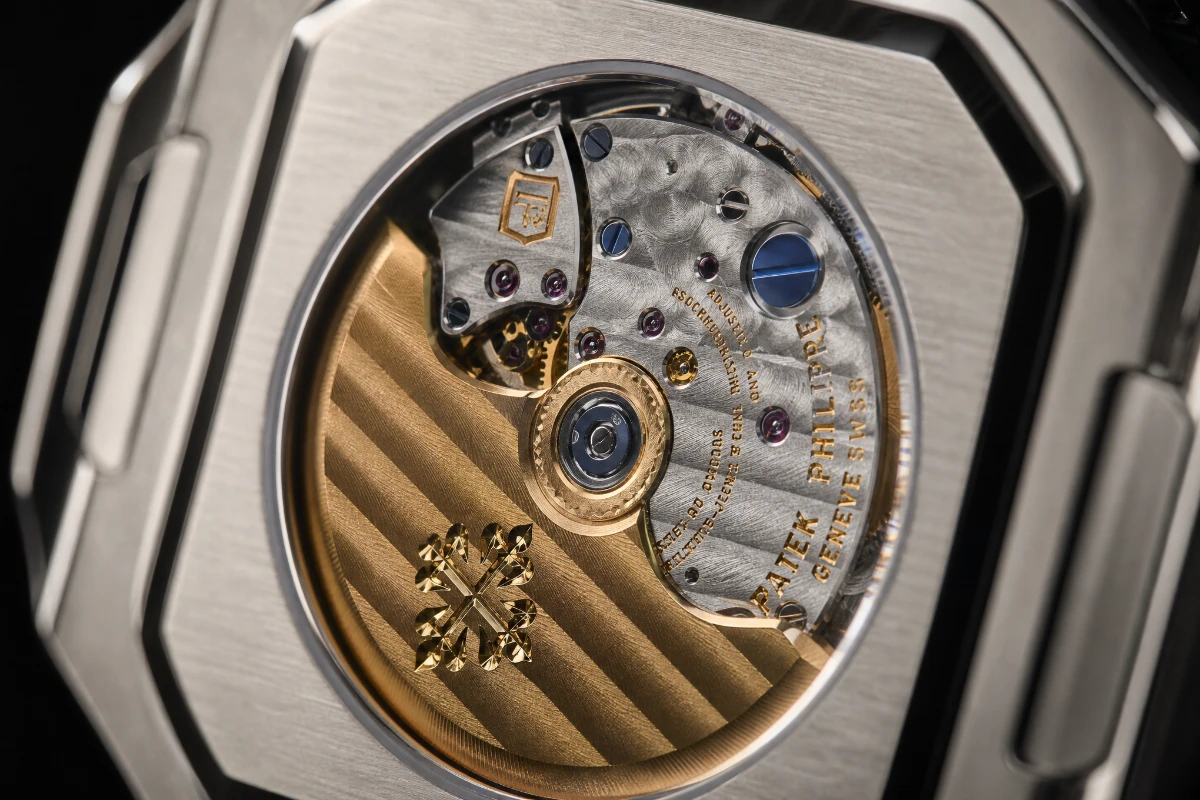
Patek Philippe movements are hand-decorated to a level that’s difficult to fake convincingly. Genuine movements show Côtes de Genève (Geneva stripes), perlage, bevelled and polished edges on bridges, and blued screws – all applied by hand, so the finishing has a subtle irregularity that’s actually a sign of quality, not a flaw. Mass-produced fake movements tend to have finishing that’s either too perfect (machine-applied patterns) or noticeably crude.
Since 2009, genuine modern Patek Philippe watches carry the Patek Philippe Seal, the brand’s own in-house quality mark that replaced the historic Geneva Seal (Poinçon de Genève). Older pre-owned pieces may carry the Geneva Seal instead – both are genuine, but it’s worth knowing which applies to the era of watch you’re looking at, since an inconsistency between the two can be a red flag.
Dial printing and hands
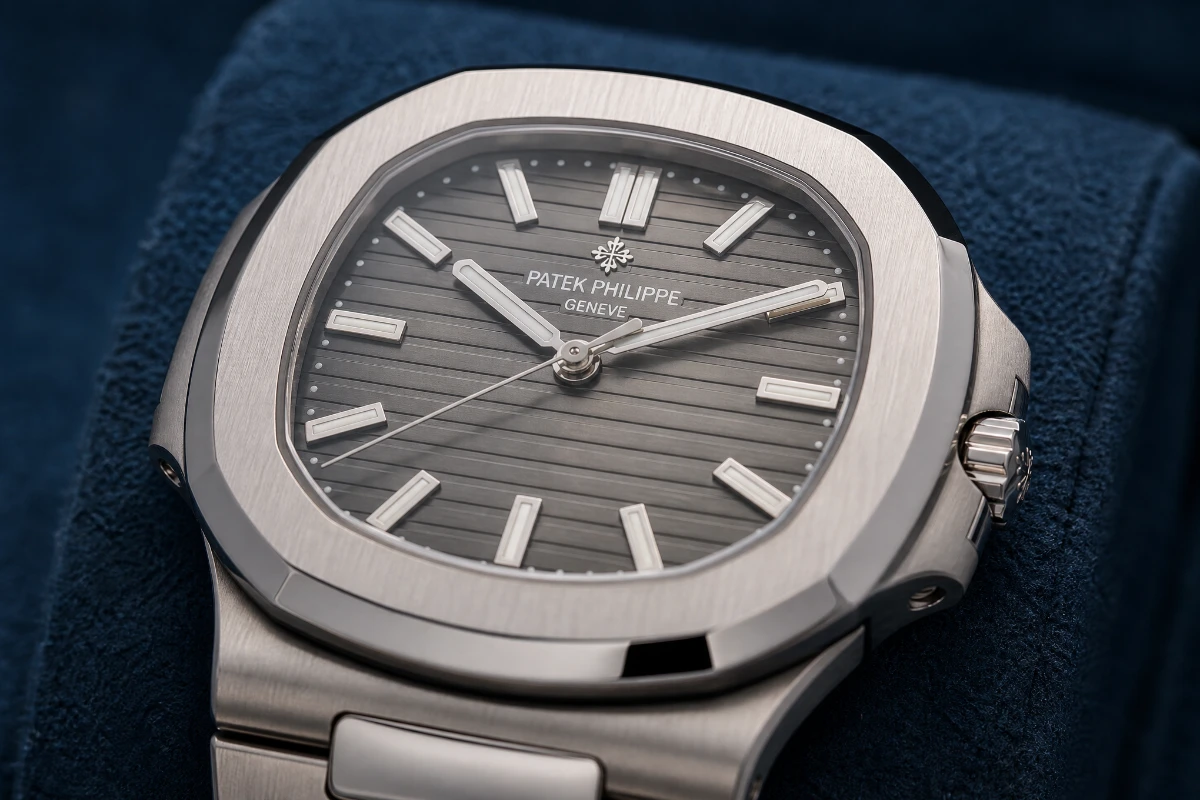
A genuine Patek Philippe dial has flawless, sharp printing, with the Calatrava cross logo cleanly applied and perfectly centred. Text should be crisp with no smudging, and hour markers and hands should be uniformly finished and correctly proportioned for the reference. On fakes, printing is often very slightly blurred, text spacing can be uneven, and lume application on the hands and markers is frequently inconsistent in colour or thickness.
Case back and engravings
Many Patek Philippe dress watches have solid case backs, while sports models like the Nautilus and Aquanaut have exhibition case backs showing the movement. Engravings – including the case reference and serial numbers – should be deep, sharp, and perfectly aligned. Shallow, uneven, or slightly misspaced engravings are a common tell on counterfeits.
The crown
The crown should be engraved or embossed with the Calatrava cross, cleanly finished with no rough edges, and turn smoothly with no grinding or looseness – winding and setting the time should feel precise, not vague.
Checking Serial Numbers, Papers, and the Extract from the Archives
Every genuine Patek Philippe has a case number and a movement number, typically found engraved between the lugs or on the case back and movement itself, depending on the model and era. These numbers should be consistent with the reference and production period you’re expecting – a mismatch, or numbers that look freshly re-engraved, are a serious warning sign.
Patek Philippe also offers something few other brands do: an Extract from the Archives. For a fee, Patek Philippe Geneva will issue a document confirming a watch’s original specification and the date it left the manufacture, based on its case and movement numbers. It isn’t a substitute for physical inspection, and a fake can’t be issued one, so it’s one of the strongest verification tools available for a pre-owned Patek Philippe – genuine sellers and dealers won’t discourage you from requesting one.
Original box and papers add real value and reassurance, but their absence doesn’t automatically mean a watch is fake – plenty of genuine watches change hands without their original box over the years. What matters more is whether the watch itself checks out against everything above.
Real vs Fake Patek Philippe: What Sets Them Apart
A genuine Patek Philippe is built to be serviced and passed down for generations – that’s a founding principle of the brand, not just marketing. It keeps excellent time, and every component is designed to be repairable and maintainable decades from now.
A fake has none of this behind it. It may look convincing in photos or even in hand for the first few months, but the underlying quality simply isn’t there – timekeeping drifts, components wear against each other incorrectly, and there’s no path to a proper service when something goes wrong, because no authorised service centre will touch a counterfeit.
How to Buy a Genuine Patek Philippe Safely
The safest way to buy a pre-owned Patek Philippe is through a dealer who inspects every watch before it’s offered for sale, is transparent about a watch’s condition and history, and stands behind what they sell. Be cautious of listings with unusually low prices for the reference, sellers unwilling to provide close-up photos of the movement, case back, and engravings, or anyone reluctant to discuss an Extract from the Archives.
How Motion Watches Can Help
Every watch we buy and sell, including every Patek Philippe, goes through inspection before it’s offered to a client – part of the 100% Authenticity Guarantee you’ll see across our site. If you’re considering a Patek Philippe purchase and want a second opinion on a watch you’ve found elsewhere, or you’d rather buy from stock we’ve already verified, get in touch and we’ll help.
What to Do If You Think You’ve Already Bought a Fake
If you own a Patek Philippe you now suspect isn’t genuine, don’t wear it or attempt to sell it on until you’ve had it independently checked – doing either can make a difficult situation worse. Start by getting the watch assessed by an independent watchmaker or authentication specialist who has genuinely handled Patek Philippe pieces before, rather than a general jeweller. If you bought it recently, go back to the seller with what you’ve found; if you paid by card or through a platform with buyer protection, that protection may still apply even after the sale has completed, so check the terms before assuming it’s too late.
If the watch turns out to be a genuine article after all, requesting an Extract from the Archives from Patek Philippe Geneva is worth doing at that point regardless – it gives you paperwork to rely on the next time you come to sell or insure it.
Final Thoughts
Patek Philippe’s reputation is built on precision and craftsmanship that’s genuinely difficult to fake convincingly once you know what to look for. Weight, case finishing, movement decoration, dial printing, and serial numbers all tell a consistent story on a genuine watch – and a fake will usually give itself away in at least one of them under close inspection. When in doubt, buy from a dealer willing to let you verify every detail, including an Extract from the Archives.
FAQ
Does every Patek Philippe come with an Extract from the Archives?
No – it has to be requested from Patek Philippe Geneva using the watch’s case and movement numbers, for a fee. Not every pre-owned watch will already have one, but any genuine watch is eligible for one to be requested.
Is a missing box and papers a sign of a fake?
Not on its own. Many genuine Patek Philippe watches are bought and sold over the decades without their original box and papers. It affects value, but it isn’t proof of authenticity either way – the watch itself needs to be checked.
Which Patek Philippe models are counterfeited most often?
The Nautilus (particularly the 5711) and Aquanaut (particularly the 5167) are the most commonly faked, simply because they’re the most in-demand and hardest to buy new at retail price.